AI-Generated Rental Listings: What NSW Renters and Landlords Need to Know
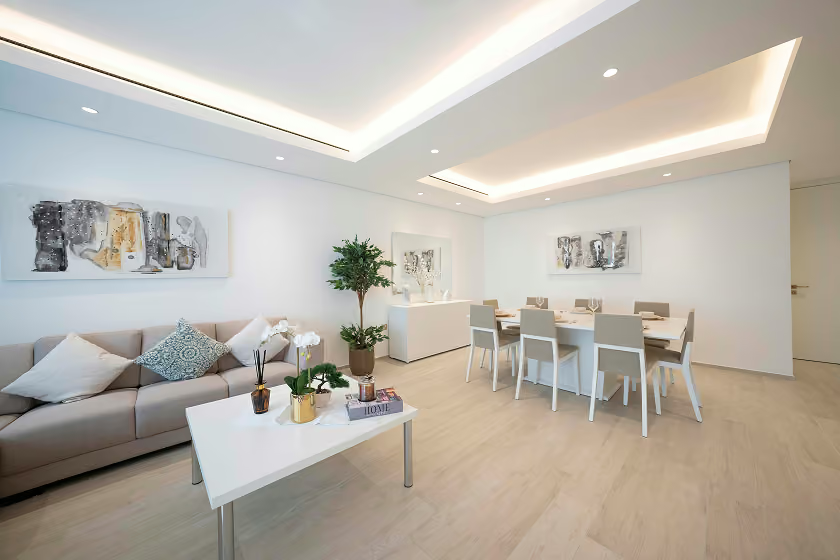
Imagine finding a rental property online that appears bright, spacious and beautifully furnished. You organise an inspection, only to discover that the room is much smaller than it appeared in the photographs, the furniture shown does not exist, or a damaged area has been digitally removed from the image.
As artificial intelligence becomes increasingly sophisticated, creating or altering property photographs has become easier than ever. This raises an important question for the NSW rental market: when does editing a property photograph become misleading?
AI is changing the way properties are advertised
AI can now be used to alter photographs, generate furniture and change the appearance of rooms and outdoor spaces.
Some digital editing may be relatively harmless, such as adjusting brightness or correcting the colour of a photograph. The legal issue becomes more significant when an alteration changes the impression a prospective tenant is given about the property.
For example, an image could potentially be altered to:
- make a room appear larger;
- add furniture that does not exist;
- remove visible damage;
- hide mould, stains or other defects;
- change the appearance of a view; or
- make a property appear substantially different from how it actually is.
For someone searching for a rental property, the photographs may form an important part of their decision about whether to inspect or apply for the property.
What does the law currently say?
NSW already has laws dealing with misleading or deceptive conduct by property agents.
Under section 52 of the Property and Stock Agents Act 2002 (NSW), a licensee or certificate holder must not induce a person to enter into a contract or arrangement through a statement, representation or promise that is false, misleading or deceptive. NSW Fair Trading also states that agents must ensure information published in advertisements is accurate and does not create a false impression.
The Australian Consumer Law also applies to the conduct of real estate and property agents. Section 18 generally prohibits misleading or deceptive conduct, while section 30 deals with false or misleading representations about the sale of land.
This means that the legal issue is not simply whether an image has been edited. The more important question is whether the advertisement creates a misleading impression for the consumer.
NSW Fair Trading provides guidance to property agents about misrepresentation and photographic advertising.
What about the proposed NSW reforms?
The NSW Government has also proposed specific reforms addressing digitally altered rental photographs.
The Residential Tenancies Amendment (Protection of Personal Information) Bill 2025 was introduced into the NSW Parliament in June 2025. Among other proposed reforms, the Bill would require disclosure in rental advertisements where images have been digitally generated or altered in a way that would be reasonably likely to mislead or deceive a prospective tenant.
The NSW Government has given examples including digitally adding furniture that makes a bedroom appear large enough for a double bed when it is only large enough for a single bed, or digitally altering an image to obscure property damage.
The proposed reforms demonstrate that the use of AI and digital editing in rental advertising is becoming a specific area of regulatory concern.
Importantly, these proposed requirements should not be confused with laws that are already in force. The Bill has passed the NSW Legislative Assembly but remains before the Legislative Council.
Does this mean all AI-edited rental photographs are illegal?
No.
The use of AI or photo-editing software does not automatically mean that a rental advertisement is unlawful.
There is an important distinction between ordinary image enhancement and an alteration that creates a false or misleading impression about the property.
For example, changing the brightness of a photograph is very different from digitally removing mould from a wall or adding furniture that makes a small room appear substantially larger.
The circumstances of each advertisement matter.
Property agents should therefore consider whether an image accurately represents the property and whether a reasonable prospective tenant could be misled by what they see.
What should landlords and agents consider?
Landlords and agents should take care when preparing photographs for rental advertisements.
Before publishing an image, it may be sensible to ask:
- Does this photograph accurately represent the property?
- Has anything been digitally added or removed?
- Could the editing change a prospective tenant's understanding of the property?
- Has a defect or significant feature been concealed?
- Does the image create an impression that would not exist if the prospective tenant inspected the property?
- If an image has been digitally altered, is disclosure required or advisable?
Keeping clear records of the photographs used in advertising and the changes made to them may also assist in demonstrating how an advertisement was prepared.
What should renters look out for?
Renters can also take practical steps to protect themselves.
Photographs can be useful, but they should not necessarily be treated as a complete representation of a property.
When considering a rental property, renters may wish to:
- attend an inspection where possible;
- compare photographs with the property's description and floor plan;
- ask questions about anything that appears unclear;
- keep a copy or screenshot of the original advertisement;
- take photographs during an inspection where permitted;
- raise any significant discrepancy with the agent; and
- seek legal advice if they believe they have been seriously misled.
NSW Fair Trading provides information about the rights and responsibilities of tenants, landlords and agents in relation to rental advertising.
What if the property is not as advertised?
A property looking slightly different in person does not necessarily mean that an advertisement was unlawful.
Lighting, camera angles, furniture and the condition of a property can all affect how a photograph appears.
However, if an advertisement contains information or images that create a false, misleading or deceptive impression, the circumstances may warrant further investigation.
A renter who believes they have been misled should keep evidence of the advertisement, including screenshots, photographs, correspondence and any other relevant information.
Depending on the circumstances, a renter may wish to contact NSW Fair Trading or obtain legal advice about their options.
The future of AI and property advertising
AI is developing much faster than many of the laws that regulate its use.
The proposed NSW rental reforms show that governments are beginning to consider how AI-generated and digitally altered images should be treated in property advertising.
For landlords and property agents, the safest approach is to ensure that advertising accurately represents the property and does not create a misleading impression.
For renters, the rise of AI-generated images is a reminder that an online photograph should be treated as one source of information about a property, rather than a substitute for making appropriate enquiries and inspecting the property where possible.
As AI becomes increasingly common in property marketing, transparency and accuracy will become even more important.
Need advice about a rental or property matter?
If you are a landlord, property agent or tenant and are concerned about a rental advertisement, property dispute or your rights and obligations under NSW law, obtaining legal advice early can help you understand your position and available options.